
Block Hole Clash
Gimica GmbHCasual
4.63.71K Reviews
- Version
- 1.9.0
- Installs
- 1.00M
- Age Rating
- Everyone
Screenshots

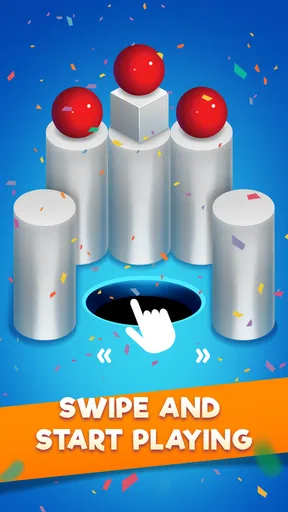
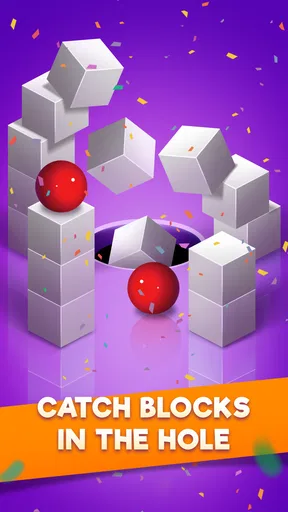
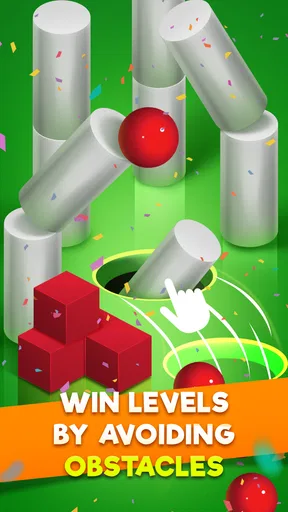
Our Review of Block Hole Clash
 Analysis by Appyee
Block Hole Clash is the kind of casual game I open when I want a quick mental reset rather than a long session. Its central challenge is simple to understand: clear the board by guiding blocks into a hole. That single objective gives the game an immediately readable identity, but the real appeal comes from how a small board can turn a seemingly obvious move into a problem of order, space, and timing.
I reviewed it as a lightweight puzzle experience from Gimica GmbH, and my overall impression is that it succeeds when I treat each level as a short concentration exercise. It is free to download, aimed at Everyone, and available for devices running Android 7.0 or later. The game has reached over a million installs, while its average score sits at 4.6 from roughly ninety-six thousand ratings. Those figures suggest that its basic idea connects with a broad audience, but they do not tell you whether its particular rhythm will suit you. For that, the important question is how much you enjoy repeating a compact board-clearing task and learning through small mistakes.
One clear capability: turning board clearing into a planning puzzle
The defining capability here is not simply removing blocks. It is making the board disappear in a workable sequence. The hole gives the game a strong visual target, so I can usually understand what I am supposed to accomplish within seconds. The challenge is deciding which block should move first, because one action can open a route, close a route, or leave another piece in an awkward position.
That distinction matters. In a more ordinary matching game, I might look for identical colors or wait for a chain reaction. In Block Hole Clash, I focus more on the physical arrangement of the board. I read the available paths, consider which pieces are blocking others, and try not to spend my useful space too early. The result feels closer to a small spatial puzzle than to a reflex game, even though the presentation remains casual and approachable.
The strongest part of Block Hole Clash is the way one simple goal creates a sequence of meaningful decisions. I do not need a long tutorial to understand the premise, yet I still have a reason to pause before acting. That makes it suitable for short breaks, especially when I want something more engaging than an idle tapper but less demanding than a large strategy game.
The game’s store summary asks whether I can clear the board, and that question captures the experience better than a long feature list would. The satisfaction comes from seeing a crowded arrangement become orderly, then empty. Even when the individual action is small, the complete solution feels earned because I had to recognize the correct progression.
Why the simple objective works better than a crowded feature set
I appreciate that the core idea does not require me to remember a complicated set of rules. Casual games often become less relaxing when they add too many currencies, modes, timers, or layered objectives. Here, the board itself is the focus. I can start playing quickly, stop after a short attempt, and return later without needing to reconstruct a large story or progression system in my head.
That simplicity also makes the game easy to share with someone nearby. If a friend asks what I am doing, I can explain it in one sentence and hand over the device. The visual objective is more accessible than a game that depends on text-heavy instructions. The Everyone content rating reinforces that broad, approachable positioning, although adults who want deep strategic systems should keep their expectations realistic.
There is a useful difference between “easy to understand” and “always easy to solve.” The first is where this game earns its place. I know what the board wants from me, but I still need to inspect the arrangement carefully. That gap between clarity and difficulty is what keeps the central mechanic from feeling completely automatic.
How the board feels in practice
When I play, I try not to rush the first move. My most reliable habit is to scan the whole board before touching anything. I look for pieces that appear trapped behind others, then identify the movement that creates the most room. This is more effective than immediately choosing the block closest to the hole, because proximity does not always mean usefulness.
A practical technique is to think in terms of access rather than individual pieces. If one block prevents several others from reaching the hole, moving it may be more valuable than clearing a piece that is already easy to handle. I also pay attention to the space that will remain after a move. A successful action is not only one that removes a block; it is one that leaves the next action possible.
This is where the game can quietly test patience. The obvious move is often attractive because it produces instant progress, but a slightly less direct move may create a cleaner route. I found that pausing for a few seconds usually saved more time than experimenting randomly. That makes the game a good fit for players who enjoy visual planning, but a weaker fit for anyone looking for constant speed or immediate spectacle.
When I make a mistake, I prefer to treat it as information. Instead of repeating the same move, I ask what the board was telling me: did I remove the wrong blocker, use an important opening too early, or fail to notice a piece that needed to move first? This mindset is one of the more valuable lessons the game offers. It encourages small adjustments rather than frustration after every failed attempt.
A realistic everyday session
Imagine waiting for a coffee or sitting on a short train ride. I can open the game, study a board, and work through the arrangement without committing to a long play session. If I solve it quickly, I get a compact sense of completion. If I do not, I can put the phone away and return to the same kind of challenge later without feeling that I abandoned a major campaign.
That makes it different from a typical action game, where stopping in the middle of a match can feel disruptive. It is also different from a traditional match-three game, where the focus is often on creating combinations under pressure. Here, my attention goes toward the order of removal and the shape of the remaining space. For a short break, that quieter form of engagement is the main reason I would recommend trying it.
One useful habit for mobile play is to keep the sound situation in mind. Because the central challenge is visual, I can concentrate on the board without needing to follow a story or spoken instructions. That makes the format convenient in public places, though players who expect music, narrative, or a strong atmosphere may find it deliberately modest.
What I would do when a board seems stuck
My first response is not to tap faster. I restart my mental read of the board and identify the pieces that control access. I then test the move that opens the largest useful area, rather than the move that merely looks closest to completion. This approach is especially helpful when several blocks seem to compete for the same route.
I also try to separate a genuine dead end from a moment of uncertainty. Sometimes the board is still solvable, but I have focused too narrowly on one corner. Looking at the entire arrangement again can reveal that another side should be handled first. This is a small but important trade-off: the game rewards attention, yet it does not always provide the immediate feedback that a more guided puzzle might offer.
For players who dislike replaying a failed arrangement, that learning loop may feel repetitive. For me, it is acceptable because the objective remains readable. I know what I am trying to improve: the sequence of moves. The experience would be less appealing if I wanted every attempt to produce a new kind of action, but it works when I enjoy refining a solution.
The best scenario for playing
Block Hole Clash is at its best when I have a few spare minutes and want a game that starts quickly. It fits waiting rooms, short commutes, quiet breaks, and those moments when I want to put a little distance between tasks. The board-clearing focus gives me something concrete to think about without demanding the sustained attention of a role-playing game or a competitive online match.
I can also see it working well for people who prefer games with visible goals. Some casual titles rely on endless progression, where the next objective is always just another variation of the last. Here, clearing the current board gives each attempt a clear finish line. That structure makes it easier to stop playing intentionally rather than continuing simply because the game keeps presenting another round.
The game is also a reasonable choice for families looking for a straightforward puzzle format. The Everyone age rating and uncomplicated premise make it approachable, although I would still judge suitability by the player’s tolerance for repetition and problem solving. A younger player may enjoy the visual act of sending blocks into the hole, while an older player may get more from planning the order efficiently.
For me, the best session is not one where I play for hours. It is one where I solve a few boards, notice a pattern in my mistakes, and close the game feeling that the break had a purpose. That limited, focused role is a strength. It prevents the experience from needing to compete with larger games on story or scale.
When another casual game may be a better choice
If I want fast reactions, colorful combination chains, or a strong sense of spectacle, I would choose a different casual game. A match-three title is usually better for players who enjoy creating cascades and chasing high scores. An endless runner is a better fit when the appeal comes from speed and reflexes. Block Hole Clash is more appropriate when I want the board to slow me down and make me consider the next step.
It may also disappoint players who expect a deep puzzle system with multiple rule sets. Its appeal depends heavily on the central board-clearing idea, so anyone searching for narrative progression, character development, or complex strategic layers should look elsewhere. I would not describe that as a flaw by itself; it is simply the boundary of what this game is trying to provide.
The same applies to players who dislike trial and error. Even a clear board can require reconsideration, and the satisfaction comes partly from correcting a poor sequence. If I want every action to feel immediately rewarding, this may feel slower than expected. If I enjoy spotting why a solution failed, the friction becomes part of the appeal.
The trade-offs behind the free download
The game is free, which makes trying it easy and lowers the risk for someone curious about the mechanic. It also includes in-app purchases ranging from $0.99 to $4.49 per item. I would keep that in mind before recommending it to someone who prefers a completely purchase-free mobile experience. The free entry point is convenient, but the presence of optional spending means I would review any purchase prompt carefully rather than tapping automatically.
Another trade-off is the narrowness of the main idea. A focused mechanic can feel polished and relaxing, but it can also become familiar if I play for too long in one sitting. I get more from the game when I use it in short sessions. Extended play may expose the repetition more quickly, particularly if I am not in the mood to solve similar spatial problems again and again.
The current version is 1.9.0, and the game supports Android 7.0 or later. Those details make it accessible to a wide range of older Android devices, though the experience will still depend on the phone’s general condition and screen responsiveness. I would not install it solely because of the modest system requirement; I would install it because the board-clearing format matches the way I like to spend short breaks.
There is also a psychological trade-off in its simplicity. Because the goal is so clear, I notice my own mistakes immediately. That can be satisfying when I solve a board, but mildly irritating when I keep choosing the wrong order. Players who enjoy clean feedback will probably appreciate this honesty. Players who need a more forgiving game may prefer something with boosters, hints, or more varied objectives.
Small habits that improve the experience
I recommend beginning with a full-board scan, then identifying the piece that controls the most routes. I avoid spending the easiest opening unless it also improves access to the rest of the arrangement. I also try to remember the last move that caused trouble, because repeating it without reconsideration rarely helps.
Another useful approach is to play with a deliberate pause between actions. The game’s casual presentation may encourage quick tapping, but the board is easier to understand when I give myself time to inspect the new layout after every removal. This turns the experience from random trial and error into a short planning routine.
Finally, I would use the game as a break with a defined stopping point. Solving a board is a natural endpoint, and respecting that endpoint keeps the focused mechanic enjoyable. The game is less convincing when I expect it to replace a full evening of entertainment. Its value is in the compact challenge, not in pretending to be a large-scale game.
Who gets the most from Block Hole Clash
I think the strongest audience is people who enjoy casual puzzles with a visible objective and a little spatial planning. It suits players who want to understand the rules quickly but still think before acting. It is also a good option for anyone who prefers short, self-contained sessions and does not need a story, online competition, or elaborate progression to stay interested.
It is particularly useful for a player who wants a low-pressure way to exercise attention. The board encourages me to notice relationships between pieces, anticipate the result of a move, and recover from a mistaken sequence. Those are modest demands, but they give the game more substance than a purely automatic tap-and-wait experience.
I would be more cautious about recommending it to someone who wants constant novelty. The central capability is focused, and that focus is both the reason to play and the main limitation. If you enjoy refining solutions, the repeated structure can be calming. If you need new mechanics every few minutes, it may feel too contained.
My final view is favorable, with the right expectations. Block Hole Clash does not need a complicated system to make a short mobile session worthwhile. Its board-clearing challenge works because it asks me to think about order, access, and remaining space while keeping the objective easy to read. The free price makes it approachable, and the Everyone rating broadens its audience, while the in-app purchases and potential repetition are worth considering before settling in.
For a quick puzzle break, I would recommend Block Hole Clash to a friend who likes calm, visual problem solving. I would describe it honestly: this is not the choice for action, narrative, or endless variety. It is the choice for clearing a board thoughtfully, learning from a bad sequence, and enjoying the small satisfaction of making a crowded arrangement disappear.
Verdict
Strengths of Block Hole Clash
- Easy-to-learn controls make it accessible for quick casual sessions.
- Colorful graphics and playful effects create an entertaining visual style.
- Short levels fit well into commutes or brief gaming breaks.
- Simple objectives let players start playing without lengthy tutorials.
- Offline play makes it useful when an internet connection is unavailable.
Limitations of Block Hole Clash
- Gameplay can become repetitive after extended sessions.
- Difficulty may feel uneven as later challenges become more demanding.
- Ads may interrupt play, depending on the version and device.
- Limited strategic depth may disappoint experienced puzzle or arcade players.
- Progression can feel slow without spending extra time in the game.
Other Releases by Gimica GmbH
View All


Similar Picks in This Category
View All
My Talking Angela
Outfit7 Limited4.2

My Talking Tom
Outfit7 Limited4.3

Pou
Zakeh4.2

My Talking Tom 2: Pet Game
Outfit7 Limited4.3

Candy Crush Saga
King4.6

Bridge Race
Supersonic Studios LTD4.1
Frequently Asked Questions
What is Block Hole Clash and how is the gameplay structured?
Block Hole Clash is an arcade-style game centered on controlling a hole that moves around the stage and collects blocks, objects, or other items. The main objective is usually to gather enough pieces to grow or complete a challenge while avoiding obstacles and managing limited time. Its simple controls make it easy to start, although later stages may require faster movement and better planning.
Is Block Hole Clash free to download and play?
Block Hole Clash can generally be downloaded for free on supported mobile devices, allowing players to try the core gameplay without paying upfront. However, the game may include optional in-app purchases, advertisements, or bonuses that can speed up progress or improve the experience. Before downloading, check the store listing for the current pricing, available purchases, and any regional differences.
Does Block Hole Clash require an internet connection?
The basic levels of Block Hole Clash may be playable without a constant internet connection, which is useful when traveling or playing with limited data. Nevertheless, an internet connection can be necessary for advertisements, rewards, online features, updates, analytics, or purchases. Offline availability may also vary between versions, so it is worth testing the game after temporarily disabling Wi-Fi and mobile data.
Is Block Hole Clash suitable for children and casual players?
Block Hole Clash is designed around straightforward controls and short gameplay sessions, making it accessible to casual players and younger audiences who enjoy quick arcade challenges. Even so, parents should review the age rating, advertising content, and in-app purchase settings before allowing children to play. The game may become more demanding as levels progress, particularly when timing and obstacle avoidance are involved.
What should I know about ads, purchases, and device compatibility?
Before installing Block Hole Clash, review the official Android or iOS store page to confirm that your device meets the required operating-system version and storage needs. Free games of this type commonly display advertisements, sometimes between levels or after completing a challenge, and may offer optional purchases. Availability, ad frequency, and performance can differ depending on the device, region, and installed game version.
Play our best games!


